


Hungarian industrial real estate market expects further growth after the elections - helped by news of euro adoption and automotive confidence
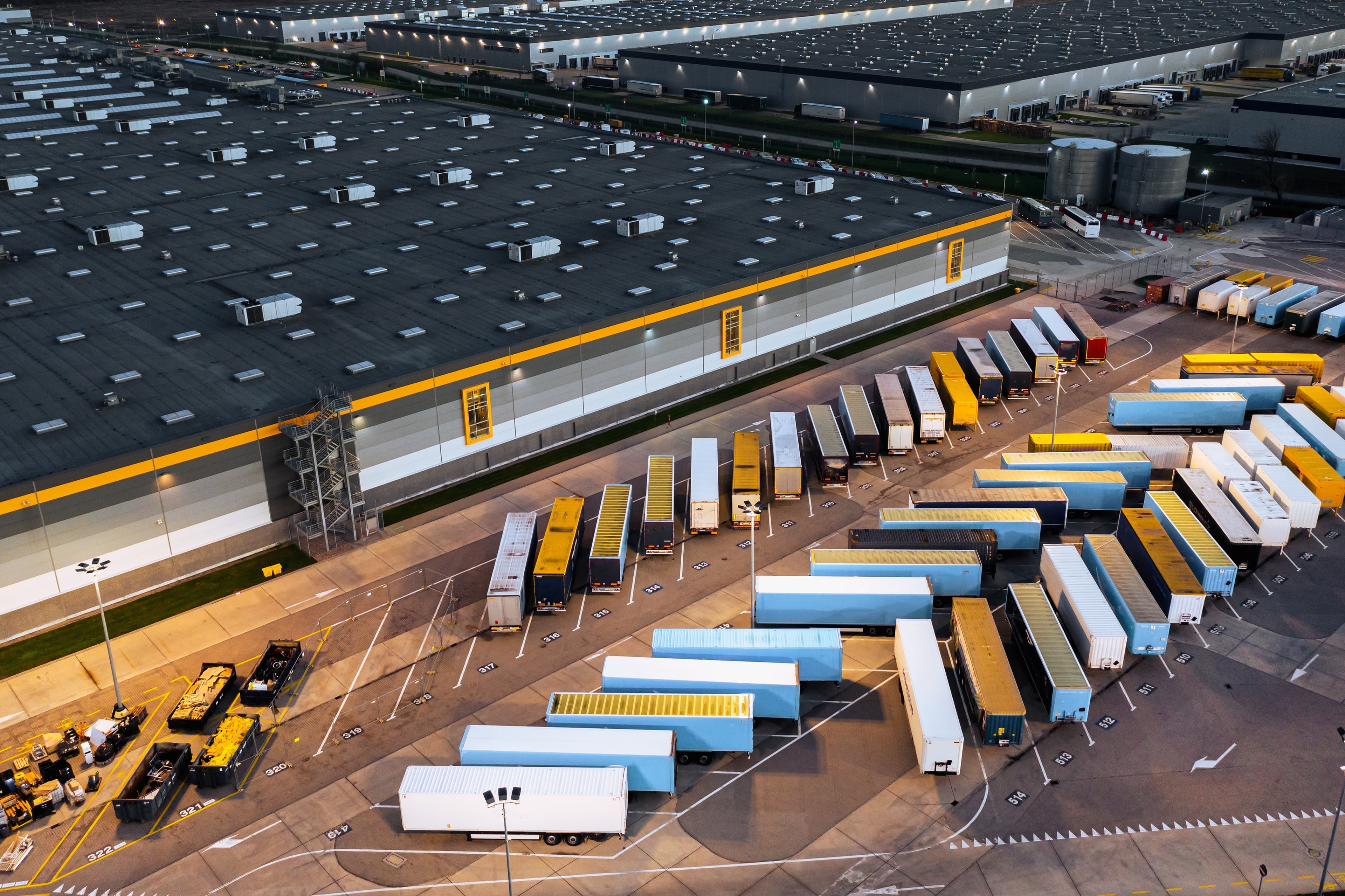
An optimistic mood prevails in the Hungarian industrial real estate market after the recent elections and the change in political circumstances. While the Czech Republic is often compared to Poland, Hungary is building its own position thanks to the automotive sector. According to real estate consultancy 108 REAL ESTATE, which has a presence in Budapest, the supply of modern warehouses and manufacturing space is expected to continue to grow, stimulated by the expected rising demand. The main reason for this is the multiplier effect of the major automotive brands already present on the Hungarian market. The vision of economic growth, expressed among other things by the new government's desire to adopt the euro as soon as possible, is also playing a role.
This is also the case for Audi in Győr, the automotive plants of Suzuki, Mercedes-Benz and Opel/Stellantis, and suppliers such as Bosch, Continental and ZF. In addition, the announced construction of a giant factory for the Chinese car manufacturer BYD in Komárom. It is therefore not surprising that in 2025, industrial space leases related to the automotive industry in Hungary reached almost 50% of all concluded transactions.
With more than 1.1 million sqm, Hungary is comparable to the Czech Republic in terms of lease volume last year.
"The difference is in the vacancy rate, which is double on the local market - around 12%. On the other hand, the supply of modern industrial space, over 6 million sqm for production and logistics, is about half of the Czech market volume," says Jakub Holec, CEO of 108 REAL ESTATE.
However, if the optimistic scenarios come true, the vacancy rate will start to decrease and space for new construction will be created. The most active developers are CTP and HelloParks, followed by Prologis, GLP, Panattoni and VGP. The 108 REAL ESTATE team is already working on contracting development land for several domestic industrial property developers.
Czech companies are also present in the Hungarian market on the tenant side. Last year saw companies such as Packeta and Rohlik Group through Kifli.hu.
"Both leases show areas that are set for rapid development in Hungary - e-commerce and urban logistics with last mile depots. In this segment we also have the most enquiries from domestic companies and operators preparing expansion towards the Balkans," adds Matej Indra, Head of Industrial Agency at 108 REAL ESTATE.
According to him, construction and transaction activity is still mainly focused on Budapest and its surroundings, where the average rent is around EUR 5.7 per sqm per month.
The above-mentioned positive prospects for the Hungarian economy are supported by the first statements and concrete steps of the new political leadership. A pro-European diplomatic and economic stance is expected, both of which have already been reflected in the appreciation of the Hungarian forint. According to Hungarian government officials, the euro is expected to replace it within a few years, which would be welcomed by most institutional investors and lenders. According to 108 REAL ESTATE, this atmosphere should be particularly evident in the investment market in 2026, which reached a value of EUR 931 million last year, with only around 16% of all transactions in industrial real estate. In particular, EUR 149 million.
The Hungarian industrial property market is showing healthy dynamics. Last year's record volume of 1,124,260 m² of lease contracts was 60% in Budapest and its catchment areas, with the rest taking place in the regions. Of interest was the high share of pre-lets in 2025, which accounted for 27% of total leasing activity in Hungary. New lettings accounted for 22%, expansions for 13% and renewals for 37%.
"The high share of pre-leases indicates solid demand for upcoming modern industrial projects. The unusually high proportion of expansions shows that existing tenants have confidence in Hungary's economic development and their growing revenues," adds Bence Soós, Research Analyst at 108 REAL ESTATE's Hungarian office.
Developers and tenants are also attracted to Hungary by other arguments - or at least prospects. Among the first are investments in transport infrastructure. Here, there is a greater reliance on public private partnerships (PPPs) and co-financing from European funds. Current plans are to extend the M1 motorway, the M6 towards Croatia and the M4 to Romania via Debrecen. Increased capacity is also planned for the M30 motorway section between Košice and Miskolc. Construction development may also be boosted by stabilisation and, in some activities, even a fall in the price of construction work and materials. Inflation, on the other hand, could be a risk, as it could climb to 4-6% this year, even in the wake of the energy crisis.
Logistics and manufacturing companies are also attracted to Hungary by the still lower average wages. The main reason is that there is room for the acquisition of a sufficient number of employees if they are offered better working conditions and remuneration. Average salaries in 2025 for production workers were around EUR 900 - 1,300 /month. For skilled workers and engineering professions it was in the range of €1 800 - 3 000/month.