



Demand for industrial facilities exceeds the volume of newly completed space—manufacturing and e-commerce are both on the rise
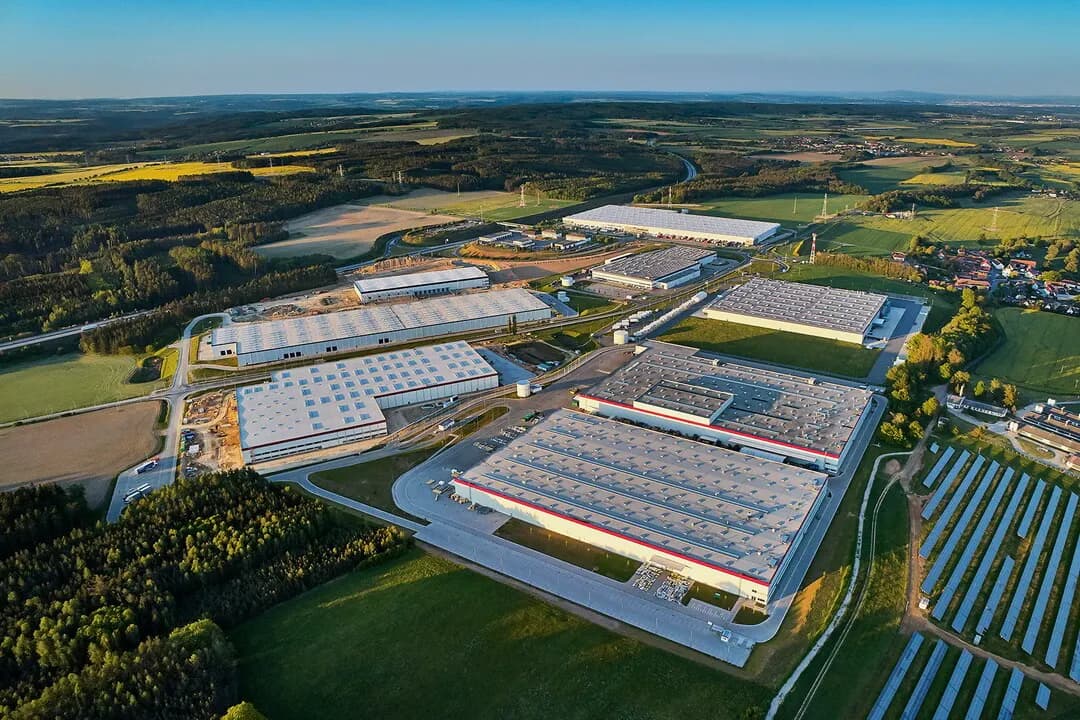
132,000 square meters of newly completed industrial space versus 263,000 m2 new lease transactions. This imbalance between the volume of leases and newly completed manufacturing and warehouse space was a defining factor for the situation in the Czech Republic during the second quarter. However, by the end of June and throughout the following weeks of summer vacation, this region also felt the effects of the hot European summer: increased fuel costs for transportation, trucks returning to the roads due to rivers becoming impassable, and the weakening performance of the German automotive industry in response to declining purchasing power and competition, particularly from Chinese automakers.
According to the real estate consulting firm 108 REAL ESTATE, however, the phenomena described are actually strengthening the domestic industrial real estate market. New warehouses are being occupied primarily by manufacturing companies and 3PL operators. There is also noticeable growing interest from the e-commerce sector. The largest lease took place at Prologis Park Prague-Airport, where workwear manufacturer Cerva Group extended its lease for nearly 42,000 square meters of space. This was followed by a lease of 30,500 m2 by an undisclosed manufacturing company at CTPark Žatec and a pre-lease by GN Group covering 30,200 m2 at Panattoni Business Park Kladno I.
“A slight increase in average rent and a move away from tenant incentives are evidence of the stabilization of the entire segment and the strengthening position of developers. Space is being leased faster than it is being built, despite a slight rise in the vacancy rate to 5%. Shell-and-core projects are gradually being occupied and completed. We are seeing a decline in developers’ interest in speculative construction,” comments Jakub Holec, CEO of 108 REAL ESTATE, on the quarterly results. According to him, from April through June, the total volume of leased space exceeded 475,000 m2, including renegotiations. Most of the new lease agreements were for manufacturing.
During the second quarter, 132,083 m² of new industrial space was completed. The largest completed projects include EQT Park Prague North with a total area of 44,900 m², Aventin Business Park Dyje with 24,500 m², and CTPark Prague North with 13,900 m². A total of 916,679 m² of industrial space remained under construction. According to data from 108 REAL ESTATE, 650,000 m² of new industrial space will be completed by the end of this year. “However, even that won’t be enough to meet demand. We therefore expect the supply of shell-and-core warehouses to gradually dwindle. At the end of June, their total area was approximately 525,000 square meters,” says Matěj Indra, Head of Industrial Agency at 108 REAL ESTATE.
According to him, activity in speculative construction will continue to decline, and overall, a boom in development activity is not expected. As a result, he anticipates room for growth in both the highest and average rents, as well as a decline in vacancy rates by the end of the year. However, significant regional differences remain: the Moravian-Silesian Region has the highest vacancy rate (15.14%), yet it is also considered one of the most promising Central European regions. In addition to the availability of space (both in terms of supply and rent levels), the region can benefit from the concentration and synergy of its higher education infrastructure with the development sector and a number of manufacturing companies.
“If we look at the volume of planned projects, the Ostrava area rivals the most attractive domestic region, the Central Bohemian Region. In both cases, the supply could grow by 2 million square meters of modern industrial space,” adds Veronika Jansová from the Research Department at 108 REAL ESTATE.
108 REAL ESTATE’s experience in the Czech industrial real estate market aligns with the findings of CzechCrunch’s rankings. At least in the logistics sector, the strengthening position of Chinese e-commerce platforms is evident. However, it will not be until the third and, above all, the fourth quarters that we will see how their expansion is affected by the new tariffs introduced within the European Union. Currently, there are major logistics tenders for established retail players, as well as demand for direct leases from the e-commerce segment.
However, recent months in the industrial real estate market have also revealed potential risks. Above all, the weakening German automotive market—both in terms of production and end customers—serves as a warning sign for some domestic manufacturers or those operating in the Czech Republic. At least some of them may find new markets in the defense industry, which is growing in importance as a manufacturing sector. One example is the Tatra Group, whose product range includes trucks, military vehicles, and specialty vehicles.
Growing and evolving geopolitical risks are also affecting the structure of cargo insurance, as recently reported by Maersk, one of the world’s largest logistics companies. The risk is shifting from maritime routes to ports, warehouses, and subsequent international and domestic transportation. This increases the emphasis on security and fire protection in warehouse facilities. “Generally speaking, a stable security situation is conducive to price stability for both services and end products. Unfortunately, the current situation is turbulent, and a gradual rise in costs cannot be ruled out, exacerbated by significant fuel price volatility. Not to mention the newly defined security standards for production and warehouse facilities,” concludes Matěj Indra.